
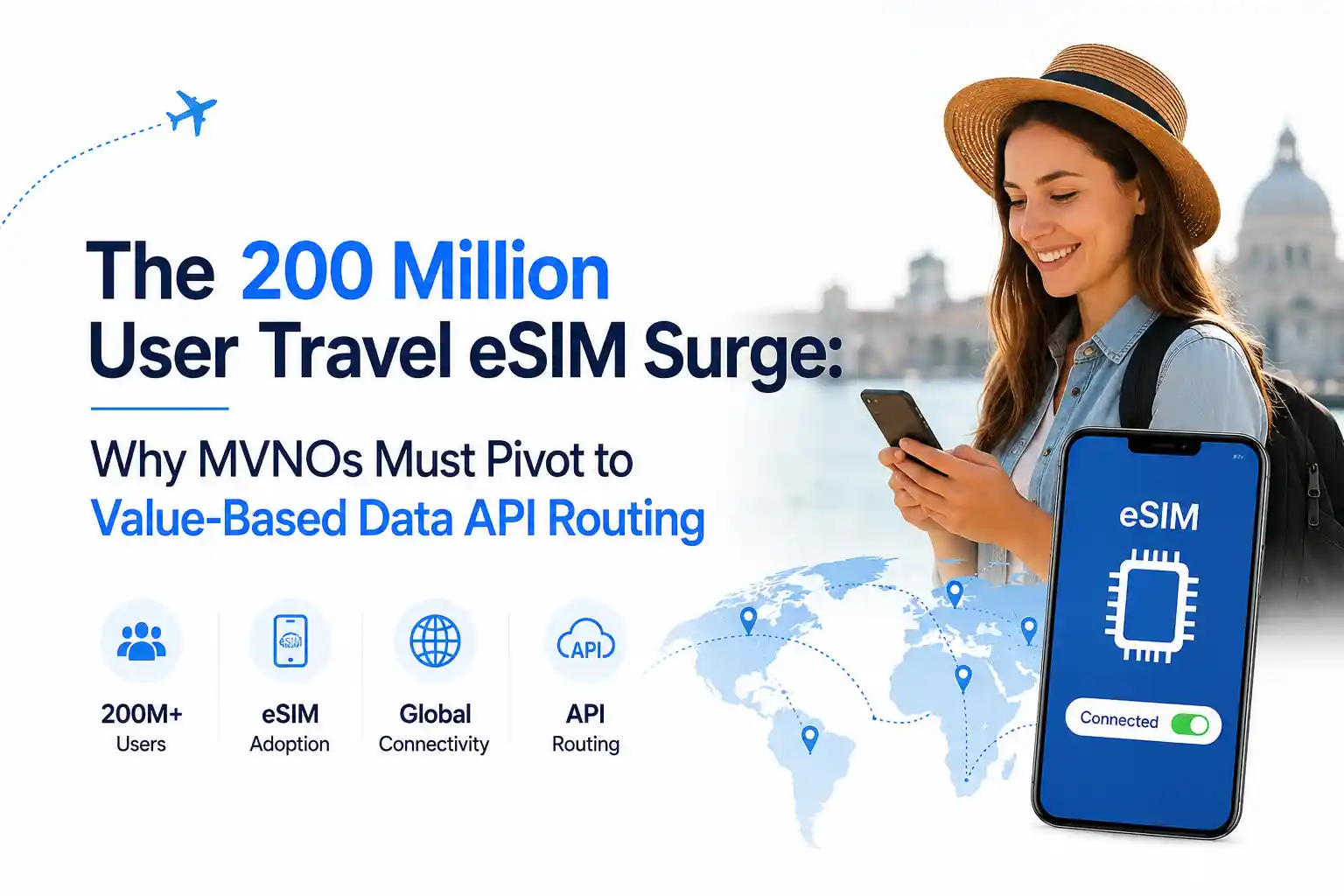

The 200 Million User Travel eSIM Surge: Why MVNOs Must Pivot to Value-Based Data API Routing
The travel eSIM market didn’t just grow; it bypassed the traditional telecom gatekeepers. With over 200 million users now activating travel eSIMs annually, consumers have explicitly rejected the $10-a-day roaming passes offered by their home carriers.
For Mobile Virtual Network Operators (MVNOs), this is a crisis. Your subscribers are downloading third-party apps at the airport, effectively stripping you of high-margin travel revenue. Slapping a digital eSIM barcode onto your existing, static roaming agreements won’t save you.
The survival of the modern MVNO relies entirely on a backend architectural shift: Value-Based Data API Routing.
The 2026 Travel eSIM Market Reality
Value-based data API routing is a telecom architecture that allows MVNOs to dynamically route a user’s cellular data through different global networks in real-time, using APIs to automatically select the most cost-effective, lowest-latency wholesale provider for that specific location.
Consumers now treat mobile data like software. They expect instant provisioning, local latency, and rock-bottom pricing. Standalone travel eSIM companies achieved this not by owning cell towers, but by mastering global data aggregation.
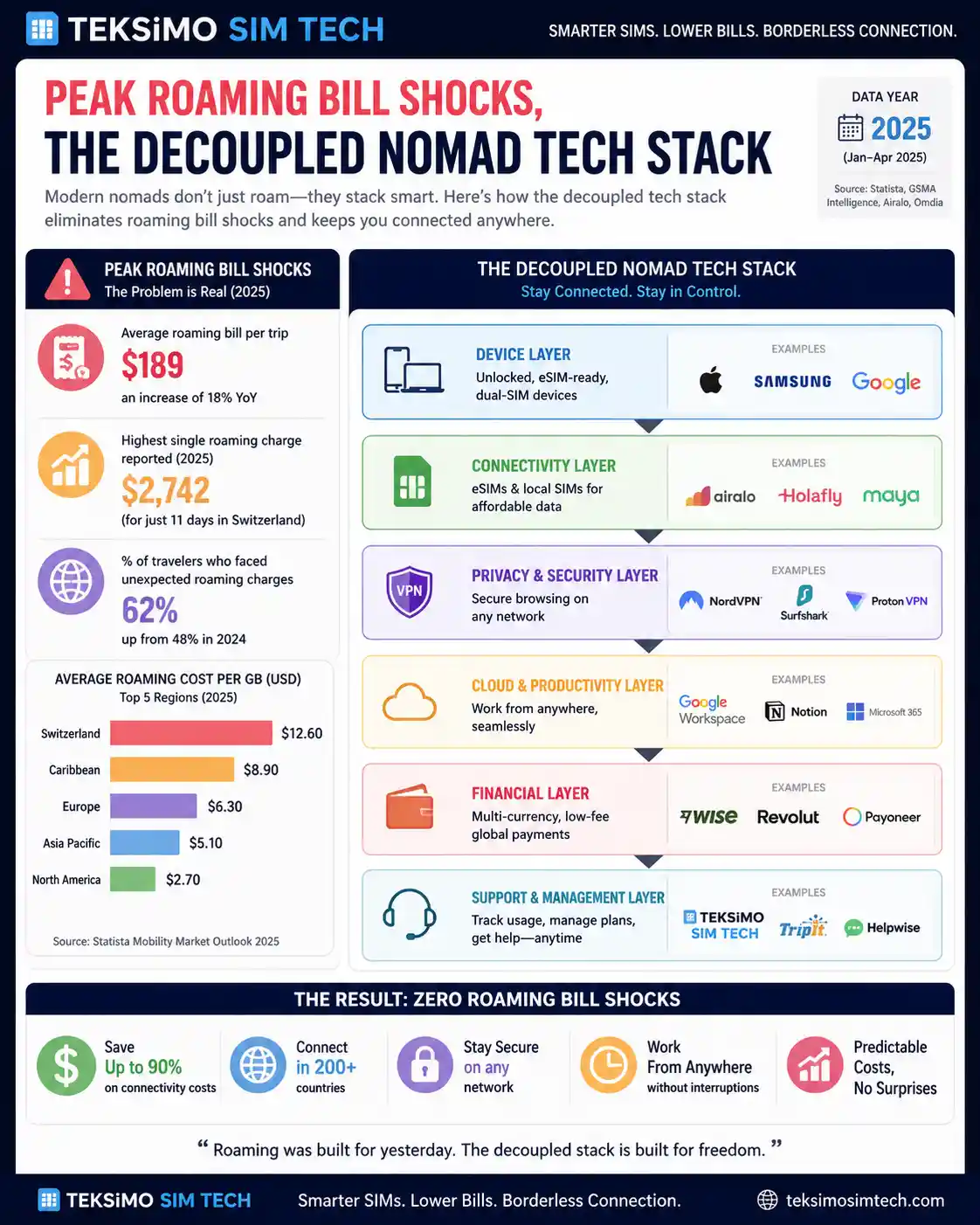
If an MVNO tries to compete by routing a user’s data from Tokyo back to a home server in London just to authorize the billing (traditional roaming), the latency frustrates the user, and the wholesale cost bankrupts the operator. The moat is no longer offering the eSIM profile; the moat is in how efficiently you route the data behind it.
What is Value-Based Data API Routing?
Value-based data API routing evaluates wholesale data costs, network congestion, and latency across multiple network partners in milliseconds. It then programmatically assigns the user’s connection to the optimal network, turning static roaming into a dynamic, programmatic marketplace.
Historically, telecom routing was hardcoded. An MVNO signed a bilateral agreement with a host network in France. If a subscriber landed in Paris, their phone connected to that specific network, regardless of whether a cheaper or faster alternative existed on the other side of the street.
Legacy Roaming vs. Dynamic API Routing
| Metric | Legacy Roaming | Value-Based API Routing |
| Network Selection | Static (Pre-negotiated bilateral agreements) | Dynamic (Real-time programmatic bidding/selection) |
| Data Routing | Home-routed (High latency, backhauled across the globe) | Local Breakout (Low latency, routed to the nearest regional cloud) |
| Unit Economics | Fixed cost per GB (often a loss leader) | Variable, optimized cost per MB |
| Provisioning | Physical SIM or single-profile eSIM | Multi-IMSI or dynamic profile switching over-the-air |
Value-based routing treats telecom infrastructure like cloud computing. Instead of locking into rigid contracts, your core network queries an API aggregator: Which partner currently offers the cheapest, fastest gigabyte of data in Berlin right now? The API routes the session accordingly.
Why the Traditional MVNO Roaming Model is Dead
The traditional MVNO roaming model relies on home-routed data and static wholesale contracts, resulting in high latency for the end-user and negative profit margins for the operator when trying to compete with digital-first travel eSIM prices.
When an MVNO user travels, their data typically tunnels back to their home country’s Packet Data Network Gateway (PGW) for policy control and billing. If a US user travels to Japan, every web search travels from Tokyo, under the ocean to California, and back again.
The Margin Squeeze of Static Agreements
This architecture creates two fatal problems for MVNOs:
-
The Latency Penalty: Ping times exceed 300ms. Modern apps time out. Users blame the MVNO and switch to a competitor.
-
The Wholesale Trap: You are paying your home network provider’s marked-up wholesale roaming rate. You cannot sell 10GB of European data for $15 if your wholesale cost is $3 per GB.
Standalone eSIM apps bypass this by using localized data breakouts and dynamic IMSI (International Mobile Subscriber Identity) switching. MVNOs must adopt the exact same API-driven approach.
How Value-Based API Routing Rescues MVNO Margins
Value-based API routing rescues MVNO margins by implementing real-time wholesale cost arbitration and local data breakouts. This minimizes data transit costs and allows operators to profitably match the aggressive pricing of standalone travel eSIM apps.
Implementing this architecture directly impacts the bottom line through two specific mechanisms.
1. Real-Time Wholesale Cost Arbitration
Instead of relying on a single sponsor network, modern routing APIs aggregate multiple Tier-1 and Tier-2 networks globally. When your user powers on their phone in a new country, the API evaluates the available networks.
If Network A charges $1.50/GB and Network B charges $0.80/GB, the API provisions the user onto Network B seamlessly. This micro-margin optimization happens continuously, protecting your unit economics without requiring human intervention.
2. Latency and Local Breakout Optimization
Value-based routing APIs utilize regional gateways. When that US user goes to Japan, their data breaks out to the public internet directly in Tokyo.
By eliminating the trans-oceanic data backhaul, MVNOs drastically reduce their transit costs. Simultaneously, the user experiences 20ms ping times, creating a premium product experience that builds brand loyalty.
Implementation Blueprint: Transitioning to API-Driven Connectivity
Shifting a legacy MVNO to an API-driven architecture requires a phased approach. Attempting a hard cutover risks subscriber downtime.
Step 1: Decouple the Core. Separate your billing and policy control from your host network’s rigid infrastructure. You need an independent charging engine that can talk to modern REST APIs.
Step 2: Integrate an Aggregator. Partner with a global connectivity API platform (like Twilio Super SIM, 1NCE, or specialized telecom aggregators) rather than negotiating country-by-country roaming deals.
Step 3: Deploy Multi-IMSI Applets. Ensure your eSIM profiles carry a multi-IMSI applet. This allows the API to swap the underlying network identity over-the-air based on the routing logic.
Step 4: Configure Local Breakout. Map your IP routing so that data sessions terminate at regional cloud hubs (AWS or Azure regions) closest to the roaming user.
The Future of Programmatic Telecom
The 200 million users who adopted travel eSIMs didn’t just change their purchasing habits; they forced the financialization of telecom data.
For MVNOs, the era of relying solely on your home network’s roaming agreements is over. Data connectivity is now a programmatic commodity. Operators that pivot to Value-Based Data API Routing will transform international roaming from a margin-draining liability into a highly profitable, competitive advantage. Those that don’t will be reduced to local-only providers, watching their subscribers download their way out of the ecosystem.